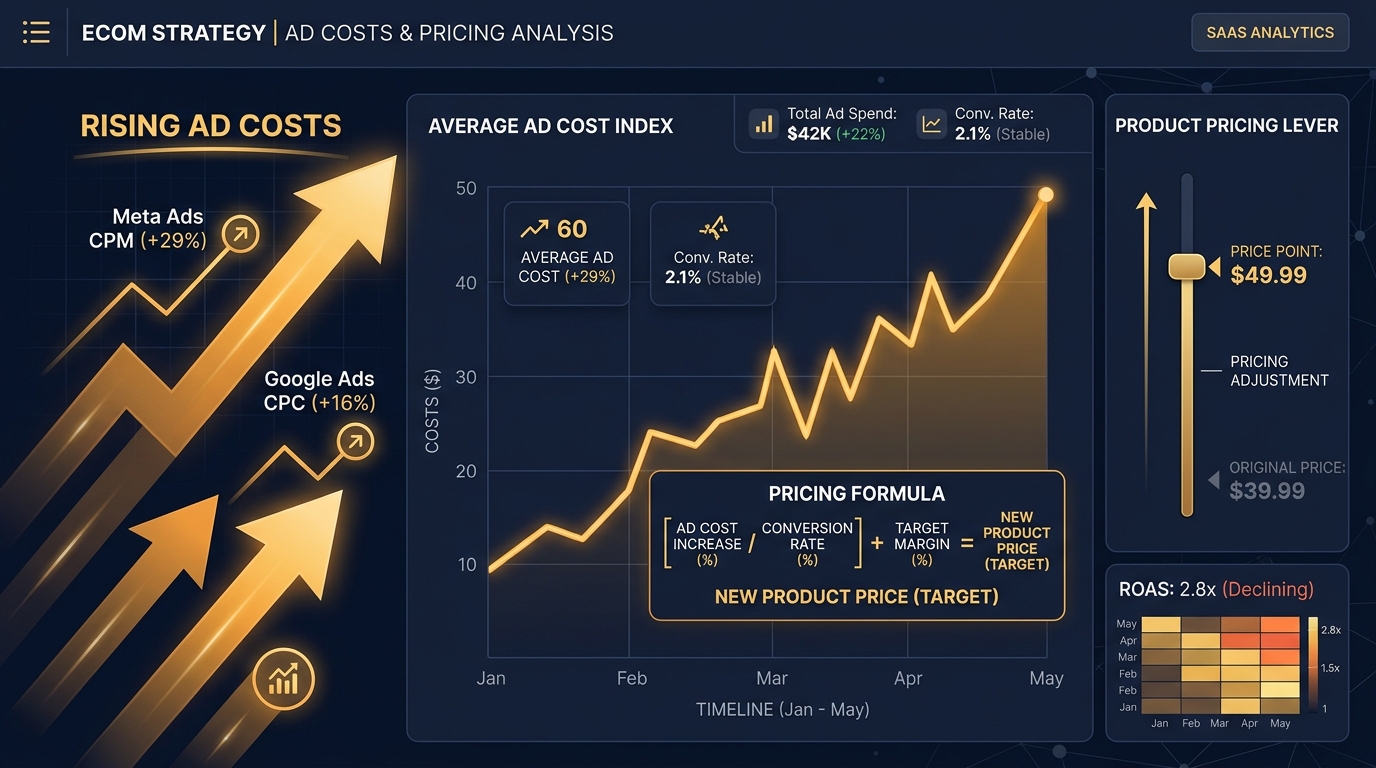
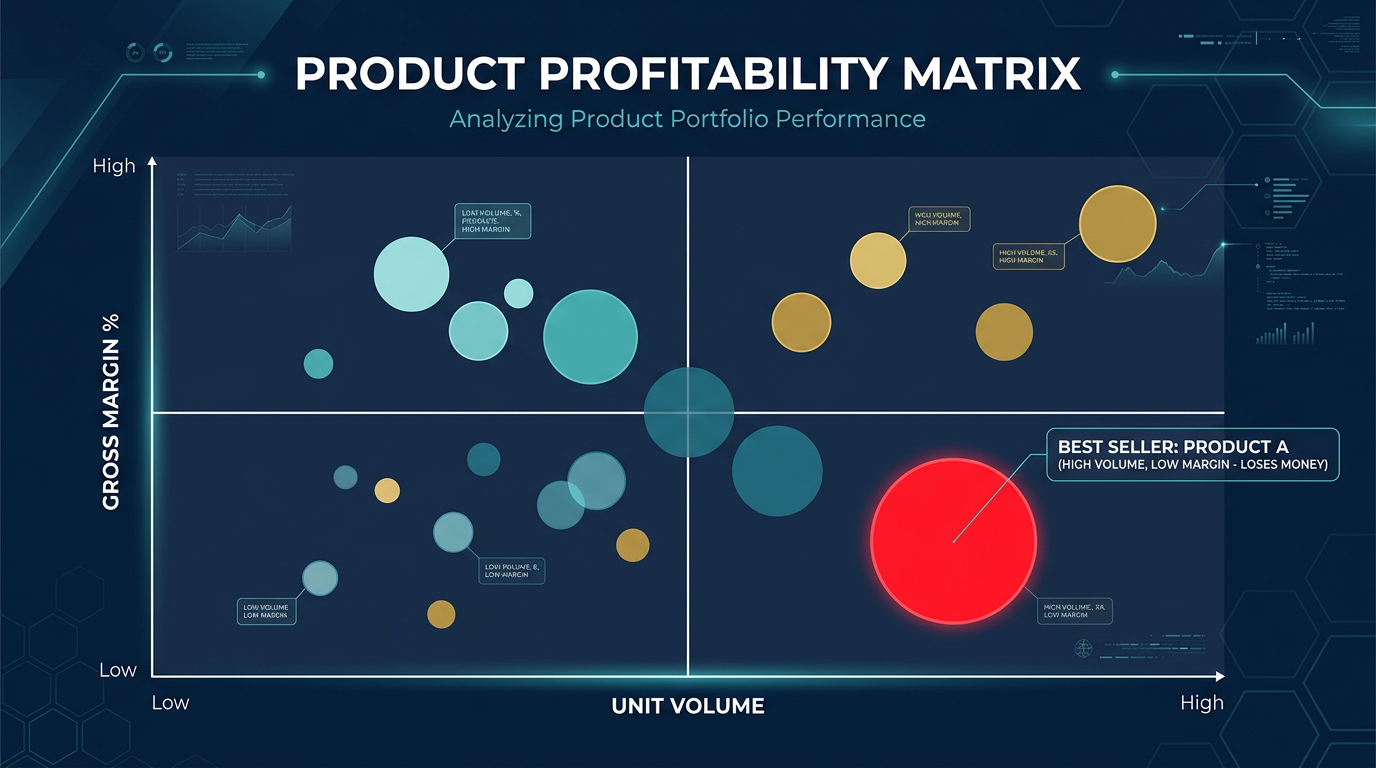
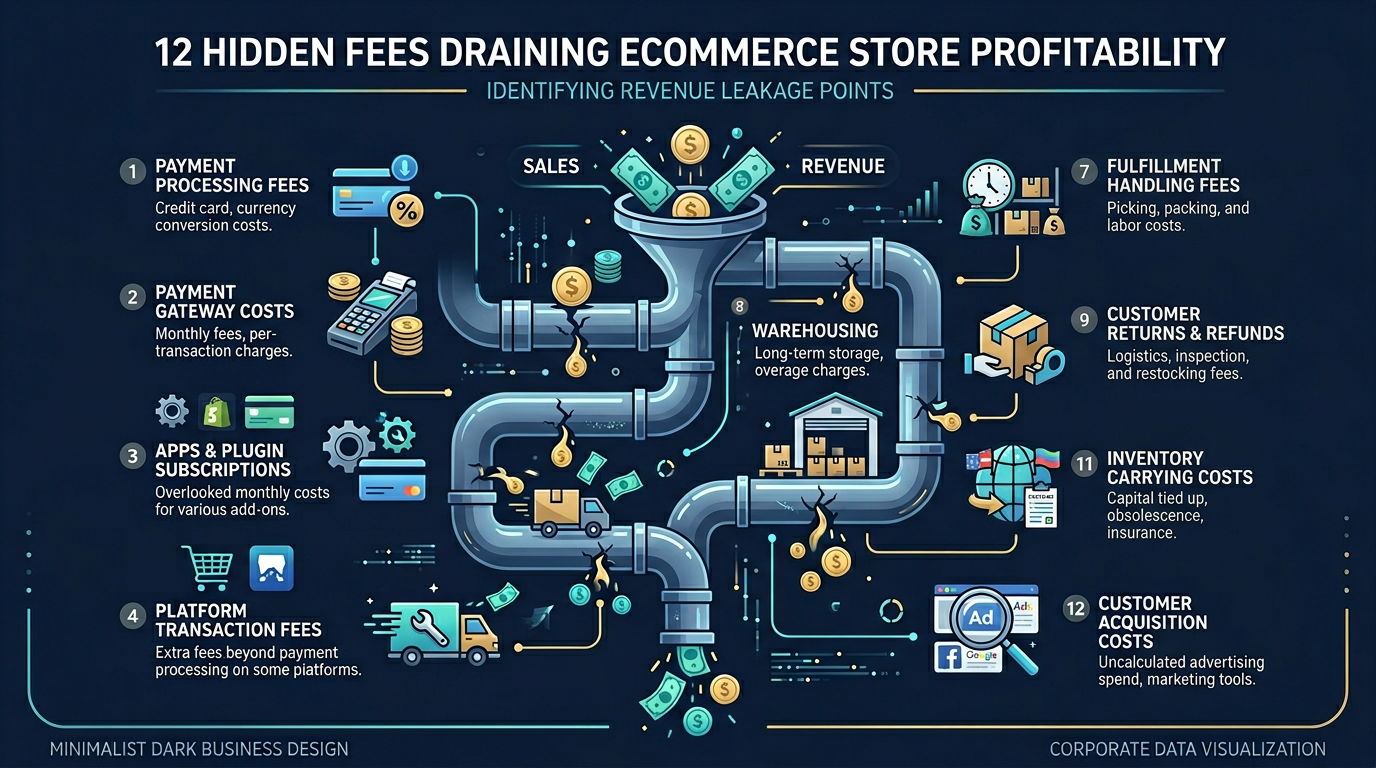
How Discounts Destroy Ecommerce Profit Margin — Even When Sales Go Up
A 20% discount does not cost you 20% of your profit. On a 40% margin product, it wipes out HALF your profit per unit. Here is the math most founders have never seen.
Nguyen Tuan Dai
Founder & CEO, Okiela
Quick answer
A discount cuts profit far more than its headline percentage. On a 40% margin product, a 20% discount does not cost 20% of profit — it wipes out roughly half. This is why revenue can climb while profit falls, and how to spot discount-driven leaks before they compound.
Key Takeaways
- 1A 20% discount destroys 33% of gross margin and 41% of contribution margin -- not just 20%
- 2To make the same profit at 20% off, you need 70% more volume -- most sales drive only 30-40% increase
- 3Stores where 60%+ of orders use discount codes have trained customers to never pay full price
- 4Better alternatives: free gifts ($3-5 cost vs $12 discount), bundles, shipping thresholds, loyalty perks
- 5One store gave away $14,200 in discounts over 90 days on $95K revenue -- 15% of top line handed back
Table of Contents (7 sections)
Here is a conversation I had last week with a founder running a Shopify accessories brand:
"We ran a 20% off sitewide sale. Revenue was up 45% for the week. Best week ever."
"What happened to profit?"
"...Profit was about the same as a normal week."
"So you sold 45% more units, handled 45% more orders, packed 45% more boxes, and dealt with 45% more customer support — for the same profit?"
Long pause.
"When you put it that way..."
This is the discount trap. It is one of the most expensive mistakes in ecommerce, and almost every store falls into it at some point.
The Math That Changes Everything
Let me show you something most founders have never calculated.
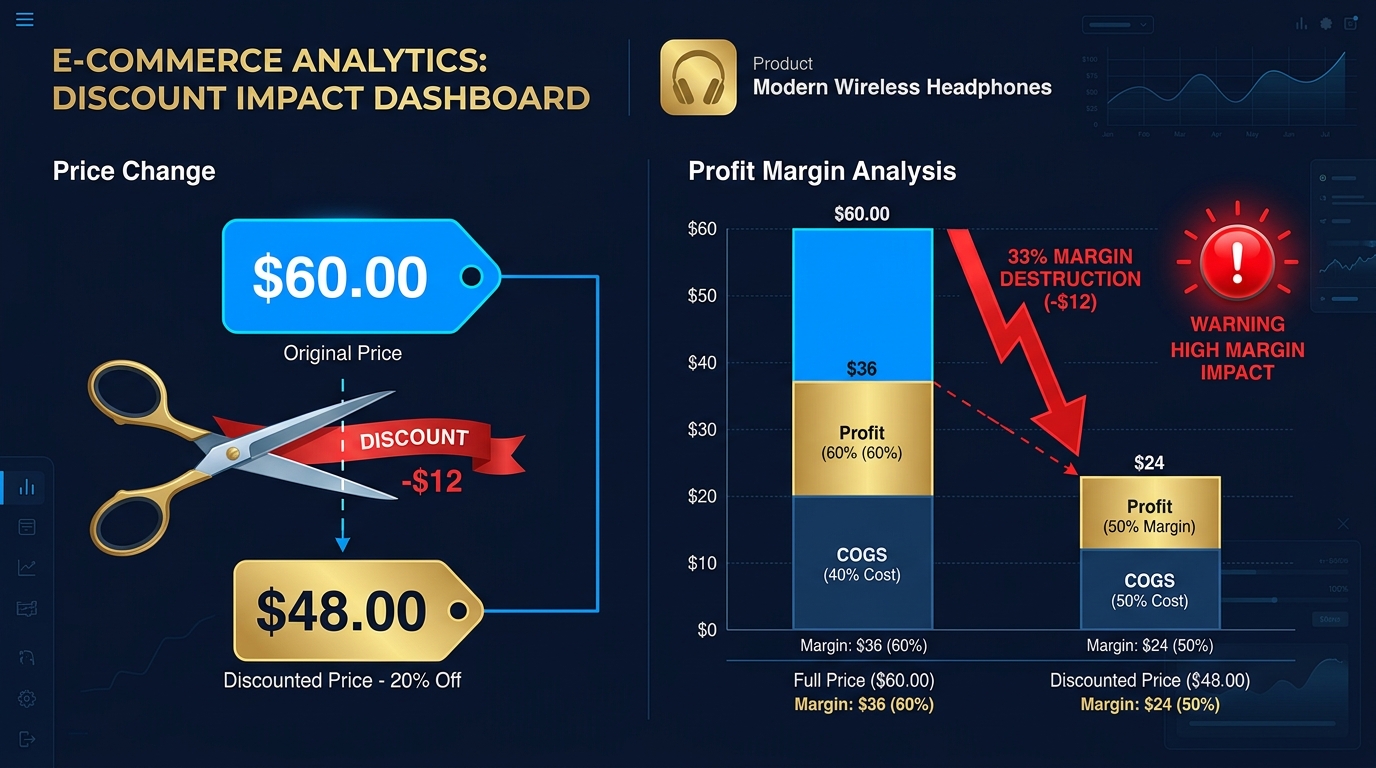
You sell a product for $60. Your COGS (cost of goods sold) is $24. Your gross margin is $36 per unit (60%).
Now you offer 20% off. The selling price drops to $48. But your COGS does not change — it is still $24. So your new gross margin is $24 per unit.
| Normal Price | 20% Off | |
|---|---|---|
| Selling price | $60 | $48 |
| COGS | $24 | $24 |
| Gross margin $ | $36 | $24 |
| Gross margin % | 60% | 50% |
| Margin reduction | — | 33% |
A 20% discount did not reduce your margin by 20%. It reduced your gross margin by 33%. One-third of your per-unit profit — gone.
Now add the variable costs that come with each order:
| Normal Price | 20% Off | |
|---|---|---|
| Gross margin | $36 | $24 |
| Shipping (net) | -$4.50 | -$4.50 |
| Payment fee (2.9% + $0.30) | -$2.04 | -$1.69 |
| Platform/app fees | -$1.20 | -$1.20 |
| Contribution margin | $28.26 | $16.61 |
| Margin impact | — | -41% |
After variable costs, the 20% discount destroyed 41% of your contribution margin. Almost half.
To make the same profit during a 20% off sale, you need to sell 70% more units. Not 20% more. 70% more.
Most sales events do not drive 70% more volume. If your sale drives a 30-40% volume increase (which is considered excellent), you actually made LESS total profit than a normal week with zero discounts.
Why Discounts Feel Good But Do Not Work
There are three reasons founders keep running discounts despite the math:
Reason 1: Revenue looks great
Your top-line number goes up. Your Shopify dashboard shows a spike. You feel productive. But revenue is vanity. Profit is sanity.
Reason 2: It "clears inventory"
Yes, discounts move old stock. But at what cost? If you discount 20% to clear inventory that was already at 45% margin, you are now moving it at 25% margin. After variable costs, you might be clearing inventory at near-zero margin — essentially paying customers to take it off your hands.
Reason 3: Everyone else does it
Competitors run sales. Customers expect discounts. BFCM exists. The industry pushes constant promotions.
But here is the thing nobody mentions: the brands with the strongest profit margins are the ones that discount the least. Go look at premium DTC brands. They rarely do percentage-off sales. When they "promote," they add value (free gift, bundle) rather than cutting price.
The Discount Frequency Problem
One-time discounts are expensive but manageable. The real danger is discount frequency.
When you run sales constantly (welcome discount, flash sale, BFCM, New Year, Valentine's Day, Spring sale, mid-year sale), your customers learn to wait. They know another discount is coming. So they add items to cart, leave, and wait for the next code.
This creates a cycle:
- 1Run a sale → revenue spikes
- 2Sale ends → revenue drops below normal (people bought early)
- 3Two weeks of low sales → panic → run another sale
- 4Repeat
Over time, your "normal" revenue declines because customers have been trained to wait for discounts. Your discounted price becomes the new expected price. You cannot go back without losing volume.
I have seen stores where 60-70% of orders use a discount code. At that point, the "discount" is not a promotion. It is just your real price with extra steps and less margin.
Smarter Alternatives to Percentage-Off Discounts
Alternative 1: Free Gift with Purchase
Cost of gift: $3-$5. Perceived value to customer: $15-$25. Margin impact: you lose $3-$5 per order instead of $12 per order (on a 20% off $60 product).
Works especially well with high-perceived-value, low-cost items. Sample sizes, accessories, branded items.
Alternative 2: Bundle Pricing
"Buy 2, get 15% off" sounds like a discount, but you are selling 2 units. Even at 15% off, your total revenue is $102 instead of $60 for a single unit, and your total margin is higher.
The key: the discount percentage on the bundle should be LESS than what you would offer on a single item. If you would normally offer 20% off, a bundle at 10-15% off is better for you and still compelling for the customer.
Alternative 3: Threshold-Based Free Shipping
"Free shipping on orders over $75." This increases AOV without reducing your margin per unit. The customer adds an extra item to hit the threshold. You absorb $5-$8 in shipping but gain $15-$20 in additional margin from the extra product.
This outperforms percentage discounts in almost every test I have seen.
Alternative 4: Early Access or Loyalty Perks (Non-Monetary)
Early access to new products. Priority shipping. First-to-know email list. These cost you almost nothing but create perceived value and exclusivity.
The brands that build the strongest communities use non-monetary incentives. When your best customers get special treatment that does not involve cutting price, they feel valued without you destroying margin.
Alternative 5: Limited One-Time Discounts for New Customers Only
If you must discount, do it ONCE per customer. A 10% first-purchase discount with a $50 minimum is a customer acquisition cost, not a blanket margin reduction. And it is a one-time cost, unlike sitewide sales that discount every order from every customer.
How to Audit Your Discount Damage
Here is a 10-minute exercise:
Step 1: Export your Shopify orders from the last 90 days.
Step 2: Filter for orders with a discount code. Calculate the percentage of orders that used a discount.
- Under 20%: Healthy. Discounts are occasional, not habitual.
- 20-40%: Watch carefully. Customers are starting to expect discounts.
- 40-60%: Concerning. You are training customers to wait for deals.
- Over 60%: Your "regular price" is a fiction. The discounted price IS your price.
Step 3: Calculate your average discount percentage. If it is over 15%, you are giving away too much margin per order.
Step 4: Calculate total discount dollars for the 90-day period. Now imagine that money was in your bank account instead. That is the profit you gave away.
For context, the store I mentioned at the beginning? Their 90-day discount total was $14,200. On $95,000 in revenue, that is 15% of top-line revenue handed back to customers — before COGS, before shipping, before anything.
The Compound Effect
Here is what makes this truly expensive. Discounts do not just reduce margin on one order. They compound:
- 1Lower margin per order → less cash to reinvest
- 2Customers trained to wait → lower non-sale revenue
- 3Higher volume during sales → more returns (sale customers return at higher rates)
- 4More returns → higher processing costs
- 5More orders at lower margin → same workload, less profit
Each of these effects feeds the next. It is a downward spiral that starts with "just a 20% off sale."
What Okiela Shows You
When you upload your Shopify data to Okiela, the profit dashboard calculates your discount impact automatically. You see:
- Total discount dollars per period
- Discount rate as a percentage of GMV
- How discounts flow through the profit waterfall (reducing L1 to L2)
- Per-SKU discount rates (which products are being discounted most)
- Contribution margin per order WITH discount vs WITHOUT
This lets you make decisions with numbers, not gut feelings. You might discover that one product gets discounted on 80% of orders — at which point the "regular" price is fake. Either raise the regular price and stop discounting, or lower the regular price and be honest about it.
Free plan on Okiela includes 3 analyses per month. Upload your data and find out how much your discount strategy is really costing you. The number is almost always bigger than you expect.
Find the hidden profit leaks draining your store.
Send one order export. Get your 3 biggest profit leaks back within 48 hours.
Request a free Profit Leakage AuditFree, founder-run, no pitch unless you ask. Every number labeled Verified or Estimated. Remove customer PII before upload.
Frequently asked questions
How much does a 20% discount actually cost my profit?
Far more than 20%. On a product with a 40% gross margin, a 20% discount comes straight off the margin, cutting profit by roughly 50%. The lower your margin, the more destructive each discount point becomes.
Why do my sales go up but profit goes down?
Discounts and promos lift order volume while quietly compressing per-order margin. If the margin lost per discounted order outweighs the extra volume, revenue rises while true profit falls — a pattern invisible in revenue-only reports.
How do I find which discounts are losing me money?
Compare per-SKU true profit with and without the discount applied. Okiela flags discount-driven negative-profit SKUs automatically — send one order export to get your 3 biggest leaks in 48 hours.
Enjoyed this article?
Get weekly profit optimization tips and Okiela product news delivered to your inbox.
No spam. Unsubscribe anytime.
Nguyen Tuan Dai
Founder & CEO, Okiela
FP&A analyst building ecommerce tools on the side. Helping founders see their real numbers since 2025.