Shopify Profit Analytics Tools: How to Compare Them Honestly (2026)
A practical framework for comparing Shopify profit tools by data coverage, calculation transparency, workflow, and cost completeness.
Nguyen Tuan Dai
Founder & CEO, Okiela
Quick answer
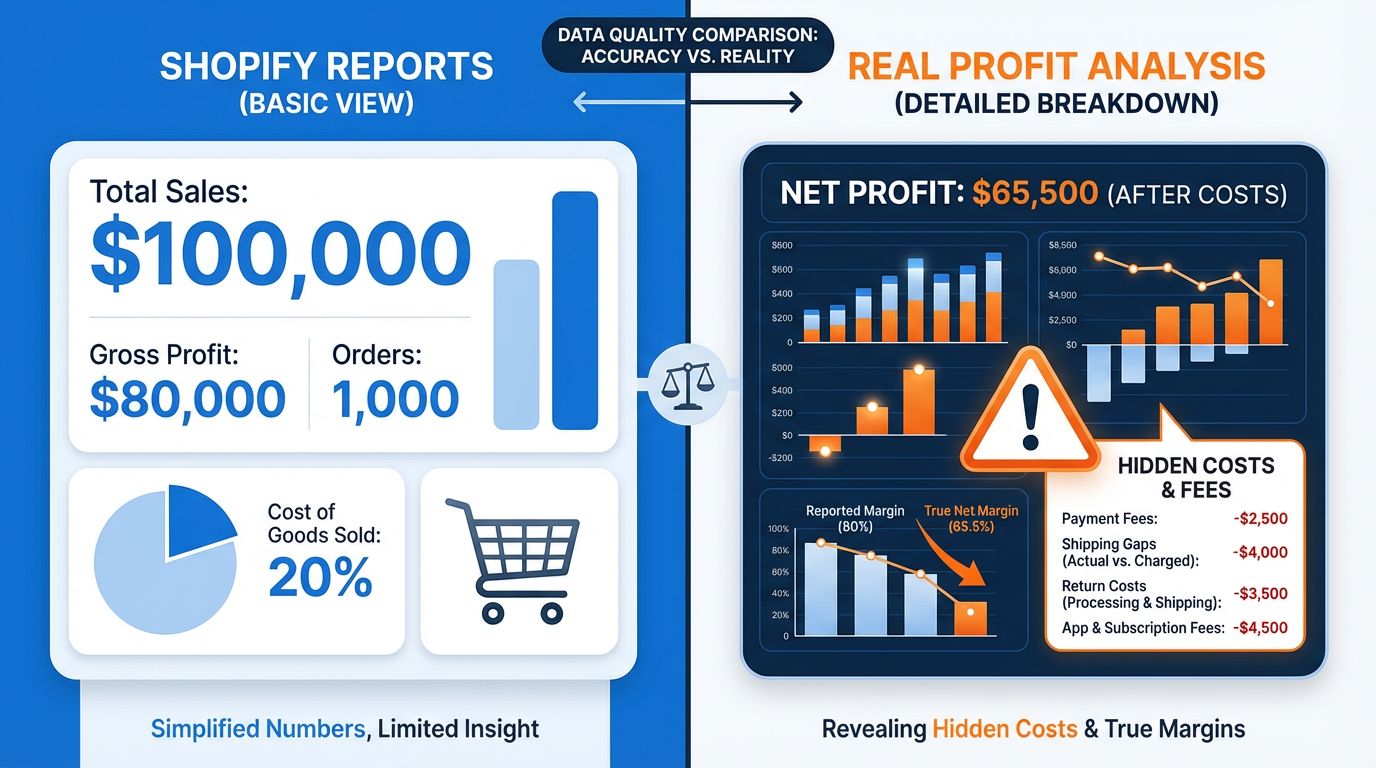
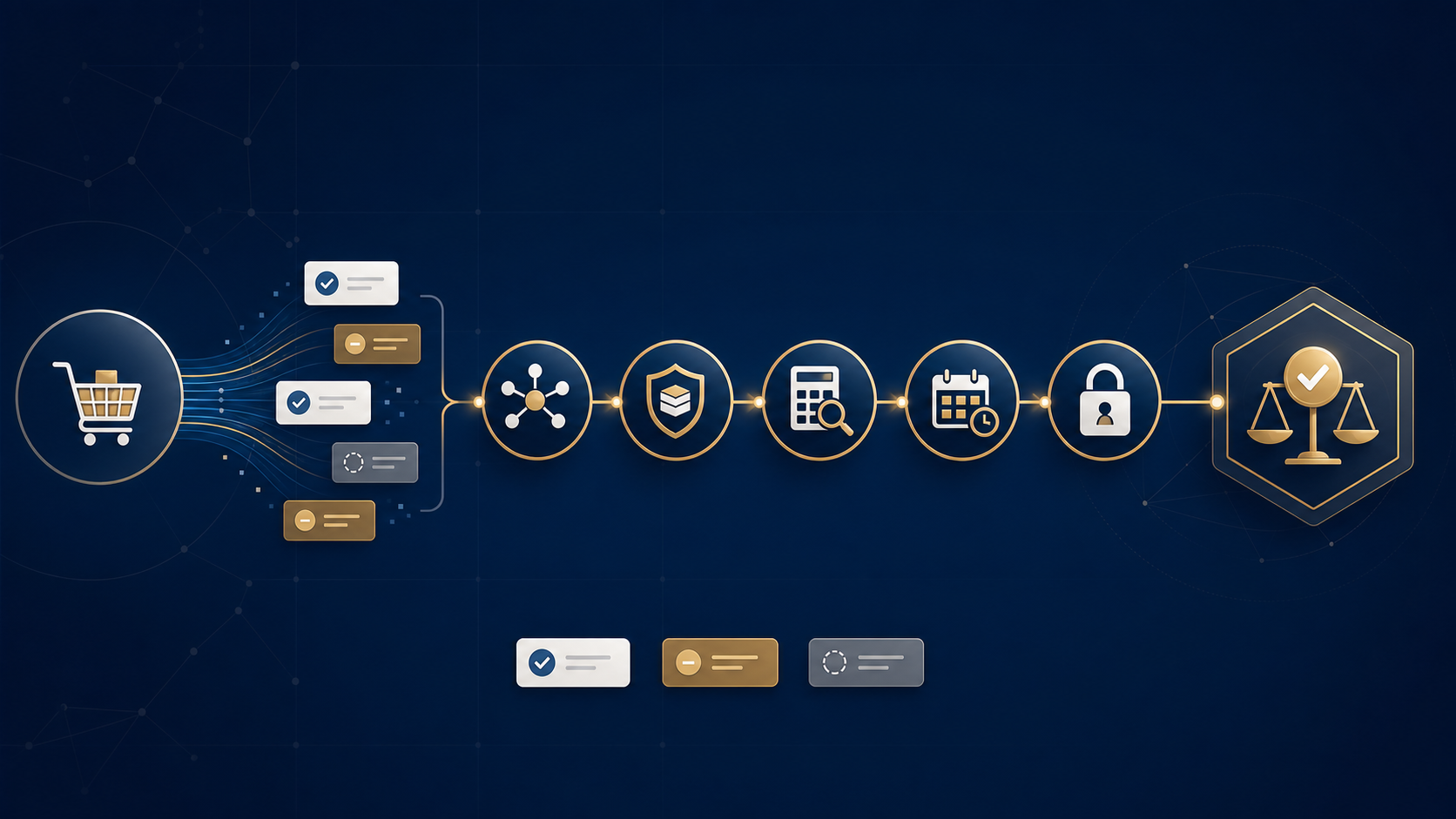
Choose a Shopify profit tool by the sources it actually connects, the costs it can verify, how clearly it labels missing data, and whether its workflow fits your team. A revenue report is not a complete profit report, and no tool should present an incomplete estimate as final profit.
Key Takeaways
- 1Choose by connected data and decisions, not dashboard appearance
- 2Orders and refunds do not prove profit without the relevant costs
- 3Exact, estimated, and missing inputs should remain visibly distinct
- 4Reconcile the app against Shopify Admin before trusting the result
- 5Okiela Shopify is Free and currently provides a bounded profit-before-ads workflow
- 6Ad, fulfillment, accounting, and operating-cost connectors are not yet included
Table of Contents (5 sections)
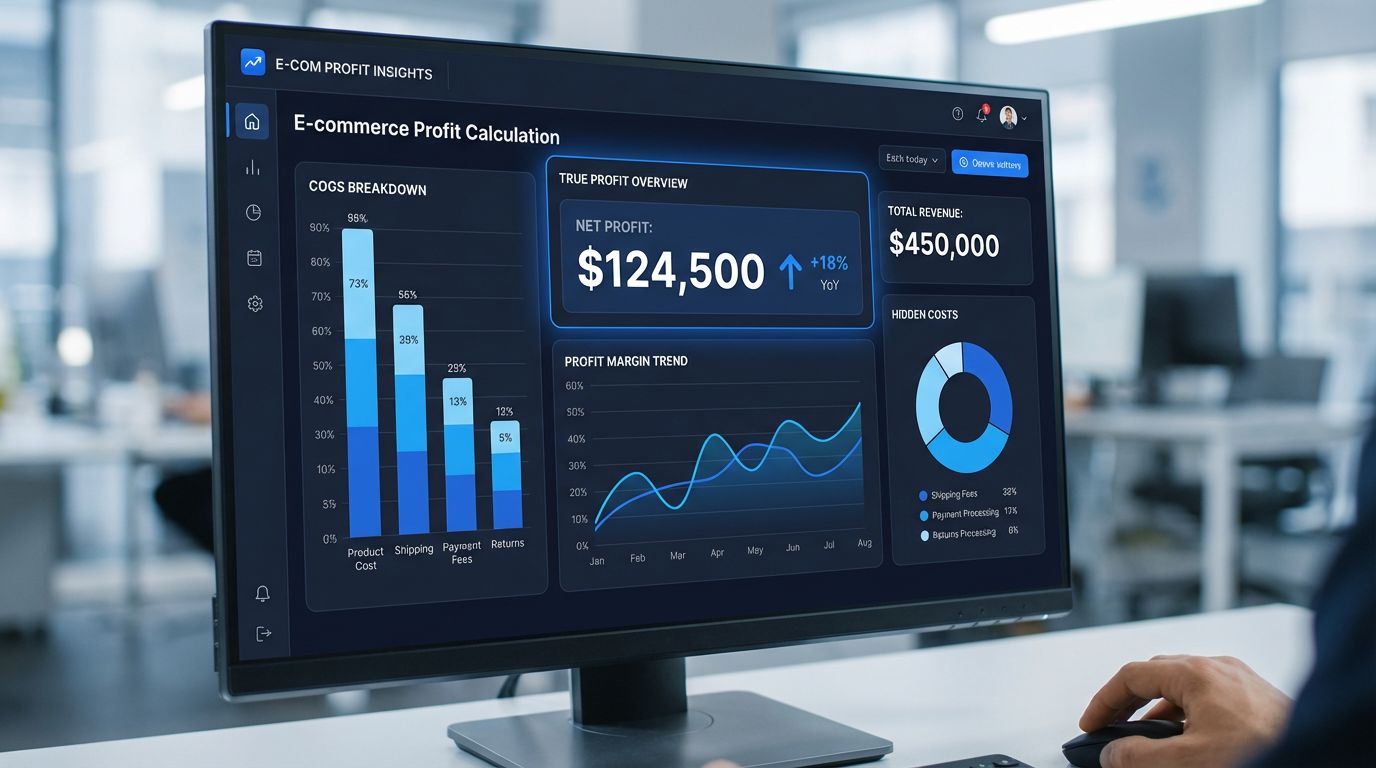
Shopify gives you a strong record of orders, refunds, products, and payouts. But a profit decision usually depends on costs that can live somewhere else: product cost, payment fees, shipping, fulfillment, advertising, apps, payroll, and other operating costs.
The useful question is not "Which dashboard looks best?" It is: Which tool can support the decision I need to make with the data I can actually provide?
Start With the Decision
Write down the decision before comparing tools:
- Do I need to reconcile recent orders and refunds?
- Do I need product-level gross margin?
- Do I need profit before ads or profit after ads?
- Do I need attribution, inventory planning, cash-flow forecasting, or multi-store reporting?
A focused tool can be valuable without covering every use case. The problem begins when a product presents partial coverage as complete profit.
Five Criteria That Matter
1. Connected data
List every source the tool connects today, not sources shown as "coming soon." Check the depth of each connection: orders alone, or also refunds, product costs, fees, shipping, ads, and operating costs?
2. Cost coverage
Ask which inputs are exact, estimated, manually entered, or missing. A numeric result should be withheld or clearly downgraded when a required cost is absent.
3. Calculation transparency
You should be able to follow the path from gross sales to net revenue and then through each included cost layer. If a number cannot be reproduced, it should not drive a pricing or budget decision.
4. Daily workflow
Test the full path: install, permission approval, first sync, error recovery, correction of missing costs, and the next action. A feature list cannot prove that this journey is reliable.
5. Commercial and privacy fit
Verify the current vendor pricing page, support terms, retention policy, and requested Shopify permissions. Prices and integrations change, so treat undated comparison tables as leads for further checking, not final evidence.
Common Tool Shapes
| Tool shape | Usually strongest when | Verify before choosing |
|---|---|---|
| Shopify order reporting | You need recent sales and refund clarity | Which costs are included and how refunds reconcile |
| Profit-before-ads analysis | Product cost is available but ad data is not | Whether ad spend is visibly marked missing |
| Multi-source profit platform | Ads, fulfillment, and operating costs are connected | Connector depth, reconciliation, setup effort, and price |
| Attribution platform | Marketing allocation is the primary decision | Attribution method and whether accounting costs are separate |
| Spreadsheet or export workflow | You need control and portability | Update effort, formula governance, and error checks |
Okiela's Current Shopify Boundary
The initial Shopify App Store version of Okiela is Free and embedded in Shopify Admin. It requests only recent order and product read access. It can reconcile recent orders and refunds, use available product costs, and show a bounded profit-before-ads view when required product costs are present.
Okiela does not currently connect ad platforms, fulfillment or 3PL systems, accounting systems, or other operating-cost sources in the Shopify app. Those inputs stay visibly missing. When required product costs are absent, Okiela withholds the numeric profit result and guides one corrective action.
That boundary is deliberate: a smaller truthful result is more useful than a complete-looking number built on guessed inputs.
A 10-Minute Evaluation
- 1Install the candidate app on a development or low-risk store.
- 2Compare its order count, refunds, and net revenue with Shopify Admin.
- 3Remove one required cost and confirm the product shows the gap honestly.
- 4Trigger a sync error and confirm there is a clear retry path.
- 5Read the requested permissions and privacy policy.
- 6Check the current pricing and connector documentation on the vendor's own site.
- 7Ask whether the next action is clearer than it was before installation.
The right tool is the one whose verified coverage matches your decision. Treat exact data as exact, estimates as estimates, and missing inputs as work still to do.
Find the hidden profit leaks draining your store.
Send one order export. Get your 3 biggest profit leaks back within 48 hours.
Request a free Profit Leakage AuditFree, founder-run, no pitch unless you ask. Every number labeled Verified or Estimated. Remove customer PII before upload.
Frequently asked questions
How should I choose a Shopify profit analytics tool?
List the decisions you need to make, then verify which data sources and cost layers each tool actually supports. Prefer products that separate exact, estimated, and missing inputs and let you reproduce the calculation.
Why can a revenue report differ from cash in the bank?
Orders and refunds explain only part of the movement. Product costs, payment fees, shipping, ad spend, operating costs, payout timing, taxes, and working-capital changes can sit in other systems or periods.
Can Shopify orders alone prove final profit?
No. Orders and refunds can establish recent revenue activity, but profit still depends on the relevant cost inputs. Okiela withholds the numeric profit result when required product costs are missing and labels ad spend and other unavailable sources clearly.
Enjoyed this article?
Get weekly profit optimization tips and Okiela product news delivered to your inbox.
No spam. Unsubscribe anytime.
Nguyen Tuan Dai
Founder & CEO, Okiela
FP&A analyst with 8+ years in financial modeling. Built Okiela on the side to help e-commerce founders see their real profit numbers.